










BOM-01Parts list · Hardware Store POS · 10 parts
Hardware store POS features, listed like a parts list
Every part below ships on every plan. Click a row to open its part drawing, with a test rig you can try, the settings involved and the questions owners ask about it.
SUB-ASSY 14 parts
The catalogue
Getting tens of thousands of items in, findable and labelled.
 F-01
F-01SKU catalogue + bulk import
Hardware inventory bulk import means loading your whole item file in one pass from a CSV or Excel sheet: SKU, barcode, name, brand, category, unit, rack/row/position, purchase and selling price, tax and opening stock.
Open drawing → F-03
F-03Units of measure
Units of measure let one item be sold in different quantities.
Open drawing →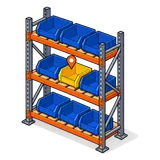 F-04
F-04Rack · row · position
Bin location inventory records exactly where each item sits.
Open drawing →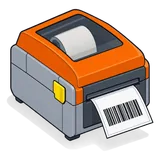 F-06
F-06Barcode & shelf labels
Shelf label printing turns your catalogue into scannable labels.
Open drawing →SUB-ASSY 23 parts
The trade counter
Contractors, quotes and the way they pay.
 F-02
F-02Trade & contractor accounts
Contractor accounts let trade customers buy now and pay later.
Open drawing → F-05
F-05Quotations
Quotation software lets the counter price a list of materials for a customer before they buy.
Open drawing →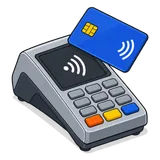 F-10
F-10Payments
Payments at a hardware counter mix cash, cards, cheques and charges to a contractor account, often on one sale.
Open drawing →SUB-ASSY 33 parts
The back office
Buying, branches and the numbers.
 F-07
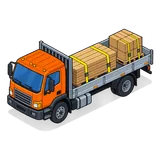
F-07Purchasing & suppliers
Purchasing in Hardware Store POS covers the supplier side: alert quantities flag what is running low, purchase orders go to suppliers, deliveries are received into a chosen location with costs, and supplier payments and returns are tracked against each supplier's pay terms..
Open drawing →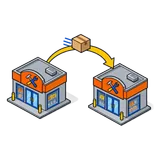 F-08
F-08Multi-location & transfers
Multi-location inventory keeps one catalogue and one customer list across several stores, yards or warehouses while tracking stock separately in each.
Open drawing → F-09
F-09Reports
Hardware store reports should answer three questions: what makes money, what sits on the shelf, and who owes you.
Open drawing →+Also in the box
Standard parts every store gets
- Online store from your catalogue
- Arabic, Urdu, Spanish interface
- Multi-currency and tax groups
- Staff roles and permissions
- Stock adjustments and counts
- Works with your printers and scanners
Not included in this edition, so you are not surprised later: lumber tally and cut-list optimisation, tinting-machine integration, tool-rental contracts, and fiscal printer certification. Card payments run through your own processor.
Q&ASheet set · FAQ
Questions about the feature set
- Which features are on every plan?
- All ten trade features on this page are on every plan, including Counter: bulk import, units of measure, rack-row-position, labels, trade accounts with credit and terms, quotations, payments, purchasing, transfers (with a second location) and reports. Plans differ by locations, registers and users.
- Is this a generic retail POS with a hardware label on it?
- The base is a mature retail and inventory platform; this edition is configured and documented for hardware and building supply: units and sub-units on, rack/row/position on, trade price groups and credit terms ready, and import templates set up for large item files.
- Does it handle special orders?
- Use a quotation or a sale with a deposit for the customer, then raise a purchase order to the supplier. When it arrives, receive it and finalise the sale.
- Can I rent tools or equipment with it?
- Tool rental needs bookings and deposits; the base software has a bookings add-on, but rental workflows are not part of this edition yet. Ask on a demo.
- Is it suitable for a lumber yard?
- Yes for the counter, catalogue, trade accounts, units (lengths, bundles), yard as a separate location, quotes and deliveries details. Specialised lumber tally and cut-list optimisation are not included.
- Does it work for paint mixing?
- Paint colours can be sold as variations or items with their own price. Integration with tinting machines is not included.
- Can I use it offline?
- It runs in the browser and needs a connection for normal work. Short drops are tolerated by the till screen, but plan for a reliable connection with a mobile backup.
- Is there a mobile app?
- The till and back office run in the browser on tablets and phones; a mobile app is available for the base platform, ask on a demo about availability in your market.
Pick the three parts that matter most to you
On a demo we set up those three with your own items and accounts first, so you can judge the software on what your counter does every day.
21-day free trial · no card to start · no contract